



If you’ve been following the news lately, you’ll know that helium supply is under renewed pressure. Global shortages are a recurring challenge, and recent disruptions have once again highlighted how fragile and complex the helium supply chain can be.
For veterinary practices running conventional high‑field MRI systems, this is more than a background concern. Liquid helium is essential to magnet cooling, and dependence on regular refills introduces exposure to price volatility, supply availability and operational disruption that can affect both budgets and scanner uptime. These risks are not limited to extreme scenarios – they have practical implications for planning, installation and long‑term ownership.
At Hallmarq, helium‑free MRI wasn’t developed as a reaction to a single shortage event. It was a deliberate design choice to remove dependence on a finite, externally supplied resource altogether. In this article, we’ll look at what zero‑helium MRI really means in practice, and address some of the common myths that continue to circulate.
Why Helium Matters for MRI and Why Supply is a Problem
Traditional 1.5T MRI machines use liquid helium to cool the superconducting magnet to approximately -269°C. A single system typically requires between 1,500 and 2,000 litres of helium to function, with top-ups needed every few years as helium naturally boils off.
Helium is the second most abundant element in the universe, but on earth it’s a non-renewable resource. It’s extracted as a byproduct of natural gas processing from a small number of facilities worldwide, which makes the supply chain inherently fragile. Prices have risen significantly over recent years and when disruptions occur – whether from geopolitical events, plant outages, or logistics breakdowns – veterinary practices are rarely at the front of the queue. Human healthcare typically takes priority.
This isn’t the first helium shortage and it won’t be the last. Which is precisely why Hallmarq built a different solution.

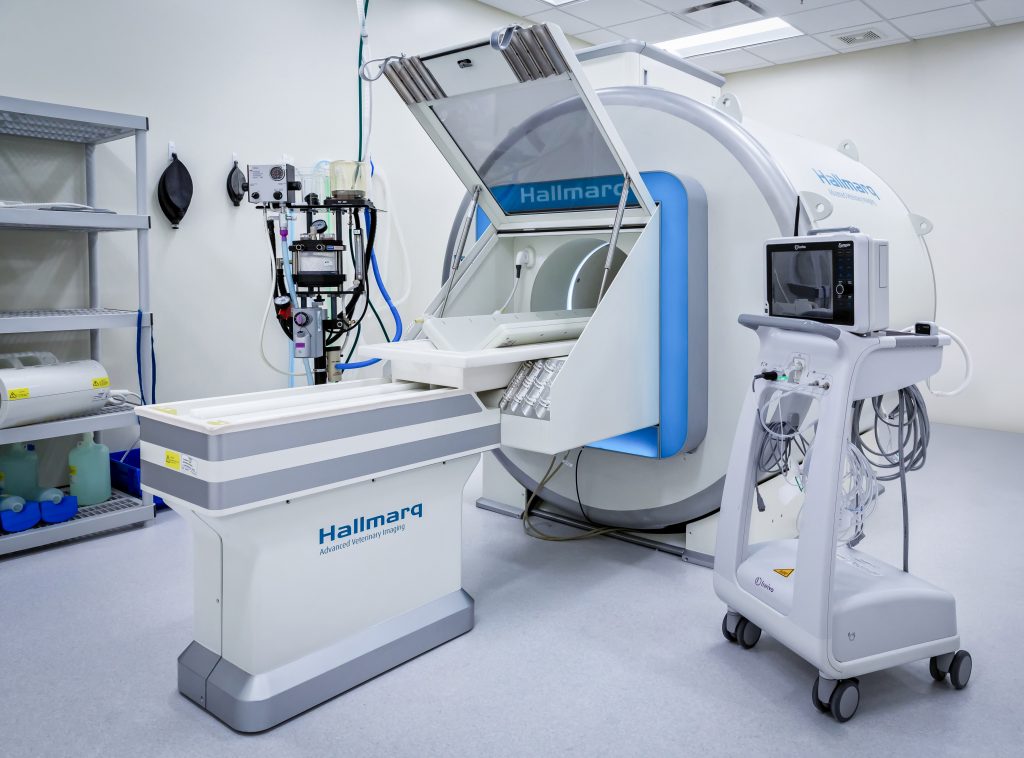
Hallmarq’s Zero-Helium Small Animal 1.5T MRI: The Facts
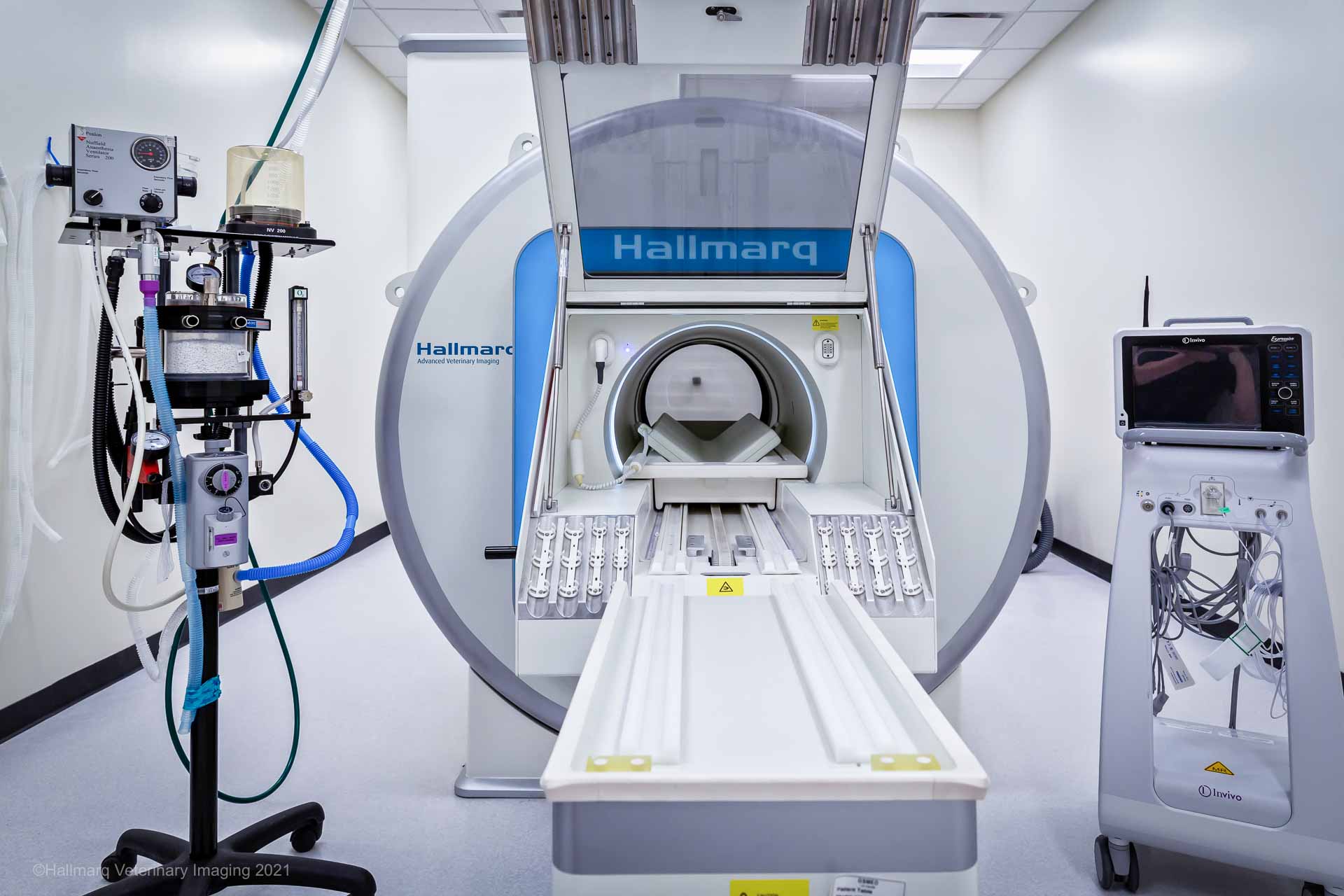
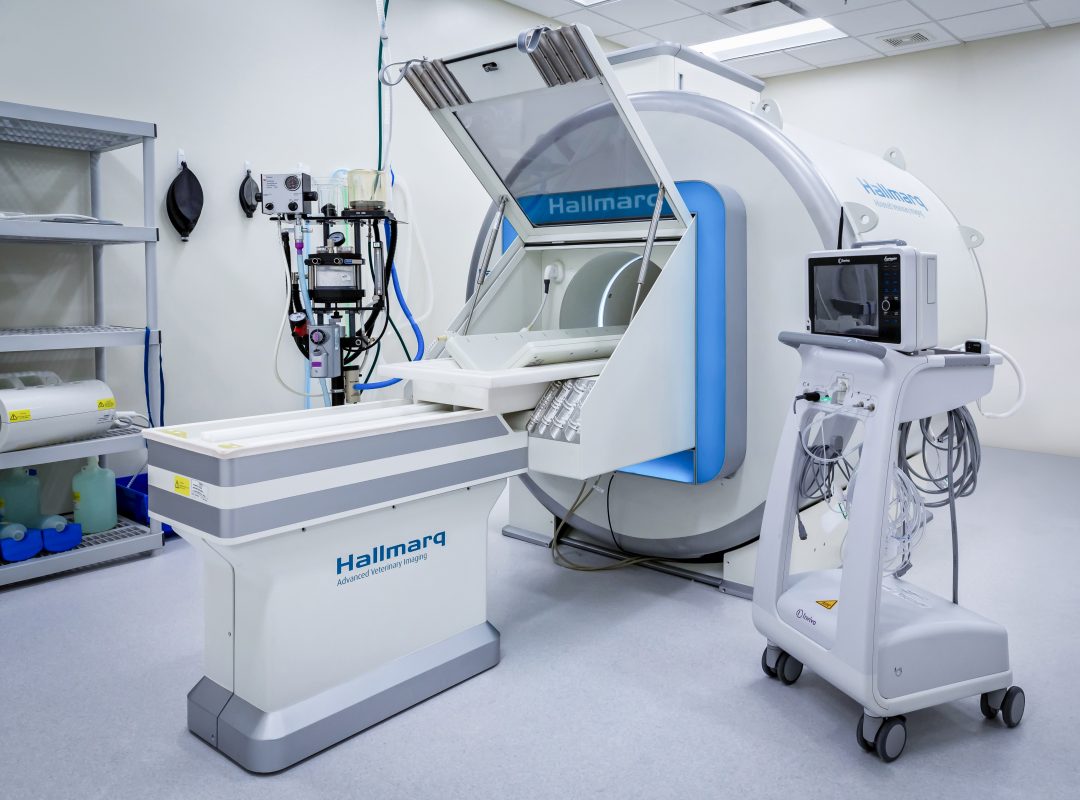
Our small animal 1.5T MRI uses vacuum technology and a conduction-based cooling system to maintain the superconducting magnet with zero liquid helium. No refills. No quench pipe. No oxygen monitor. No exposure to a volatile and increasingly scarce commodity.
It’s 100% helium-free and has been since we launched the third-generation system in 2022.
Here’s what that actually means in practice, cutting through some of the myths we hear most often.
Myth 1: “Zero-helium just means reduced helium – it still uses some”
Fact: It means exactly what it says!
Hallmarq’s system contains no liquid helium whatsoever. The magnet is cooled through a conduction-based mechanism that requires no helium and no additional power to maintain. There is no quench pipe, no boil-off and no periodic refill schedule to manage.
Importantly, this is not a system that uses less helium than conventional MRI or one that recycles helium more efficiently. It eliminates the dependency entirely. Independent healthcare market analysis notes that even “sealed” or low-helium systems in conventional MRI still rely on liquid helium inventories, whereas truly helium-free designs remove that dependency entirely.
Myth 2: “A helium-free system will compromise image quality”
Fact: Image quality is determined by magnet design and coils, not by the cooling method
The cooling mechanism keeps the magnet at the temperature it needs to function. How that temperature is achieved doesn’t affect field strength, signal quality or diagnostic capability.
Hallmarq’s 1.5T system delivers the same high-field image quality you’d expect from any 1.5T MRI, with the added advantage of veterinary specific coils and software designed around animal anatomy, not human anatomy. Our veterinary neurologists and radiologists consistently report image quality that matches or exceeds that of conventional high-field machines and our comprehensive case studies library supports their findings.
Myth 3: “Helium costs are manageable. It’s not a big enough issue to change systems over”
Fact: The total cost exposure is significant… and and it’s growing
Most 1.5T MRI systems using conventional cooling require helium refills and when a system quenches – an unplanned loss of helium – the cost to refill can be as much as $150,000 in a single event. However,that’s before factoring in the downtime, the disruption to your imaging schedule and the increasing difficulty of securing supply at all. Helium prices have risen substantially in recent years and the current supply disruption is likely to push them higher still. Practices that budgeted for helium costs at 2022 prices may find those assumptions no longer hold.
With a Hallmarq zero-helium system, there are no helium refill costs at any point. Furthermore, the technology means there’s no risk of a system quench, no permit requirement for a quench pipe installation or oxygen monitor for the MRI room. When combined, these savings contribute to a meaningfully lower total cost of ownership over the life of the system.
Independent healthcare market analysis [1] shows that helium shortages create operational risk rather than just cost pressure. When supply is disrupted, MRI systems that depend on regular helium refills are more exposed to delays, restricted access to supply, and unplanned downtime, regardless of clinical demand. Importantly, healthcare market analysis characterizes helium supply disruption as a structural vulnerability rather than a temporary anomaly, meaning reliance on regular helium refills carries ongoing long‑term risk rather than a one‑off exposure.
Myth 4: “Installation is still complex even without helium”
Fact: Removing helium significantly simplifies the process
Conventional 1.5T MRI installation requires planning for a quench pipe – a vent system that safely directs helium gas away from the room in the event of a quench. This involves additional building works, permits and cost.
Hallmarq’s system has no quench pipe requirement. Combined with its built-in RF shield, which eliminates the need for a purpose-built shielded room, installation is substantially simpler, faster and less expensive than a conventional setup typically offering a saving of around $100,000. Our team handles everything from architectural planning through to commissioning, typically getting you from contract to first scan in around four to six months.
Healthcare market analysis [1] also highlights that helium‑dependent MRI systems carry additional infrastructure and safety planning requirements that increase complexity beyond the scanner itself. Reducing reliance on helium not only simplifies installation, but removes an entire category of regulatory, safety and contingency considerations that can otherwise extend planning timelines and increase indirect costs over the life of the system.
Myth 5: “This is a niche concern. Most practices aren’t affected by helium shortages”
Fact: Every practice running a conventional high-field MRI is exposed
The helium shortage isn’t theoretical. It’s playing out in real time, with hospitals and imaging centres in both human and veterinary medicine facing supply constraints, delayed refills and cost increases they hadn’t anticipated.
Veterinary practices are particularly vulnerable and a practice that can’t access helium faces a choice between an MRI machine sitting idle, or paying whatever the market demands to keep it running.
Exposure to helium shortages is not limited to smaller or less well‑resourced operators. Current analysis [1] confirms that any practice running a conventional high‑field MRI system remains dependent on external helium supply. This exposure means vulnerability to the same availability risks, regardless of scale, planning or historic purchasing arrangements.
Hallmarq’s zero-helium technology removes that vulnerability entirely. Whether the current disruption resolves quickly or persists for months, Hallmarq customers aren’t affected.
This isn’t a reaction to the current moment, it’s been our position for years”
Mick Crosthwaite, CEO Hallmarq Veterinary Imaging
We’re raising this now because it’s relevant and timely. But the engineering decision that led to zero-helium technology wasn’t reactive, it was made years ago based on a straightforward reading of where helium supply was heading.
Conclusion
Helium shortages have brought renewed attention to how MRI systems are designed, installed and supported, but the underlying issue is not temporary. Reliance on large volumes of liquid helium introduces financial, operational and planning risks that persist throughout the life of a conventional MRI system.
As the myths explored here show, zero‑helium MRI does not involve compromises on image quality, performance or installation practicality. Instead, it removes an entire category of cost, complexity and vulnerability that practices would otherwise need to manage indefinitely.
For veterinary practices investing in high‑field MRI, the question is no longer whether helium supply will remain stable, but whether continued dependence on it makes sense at all. By eliminating that dependency entirely, Hallmarq’s zero‑helium technology provides greater certainty, resilience and confidence – whatever the wider supply environment brings. Interestingly, the rapid rise of AI data centres – who require vast amounts of helium for cooling – is pushing demand even higher. And, at the same time, availability of this finite resource continues to reduce.
Hallmarq’s zero-helium small animal 1.5T MRI was built for exactly this environment. With our 99% uptime guarantee, you can be confident that whatever is happening in global commodity markets, your imaging service keeps running.
Want to Know More?
If you’re considering small animal MRI and want to understand what zero-helium technology means for your practice – on costs, installation, image quality and long-term resilience – we’d be glad to talk.

Further reading:
[1] The Helium Crisis: Strategic Implications for Healthcare and Medical Imaging Investment – Market Research Future, 2026.