


Diagnosing pathology of the proximal limb remains challenging but advances in MRI software now allow for the acquisition of critical information that complements conventional imaging modalities such as radiography and ultrasonography.
History
The horse sustained an avulsion fracture of the right forelimb proximal suspensory origin approximately six months prior to referral. Despite a structured rehabilitation programme, lameness persisted and failed to fully resolve.
Follow-up radiographic and ultrasonographic assessments were challenging due to the extent of the injury. Unfortunately, they also failed to provide a definitive explanation for the ongoing lameness. Given these limitations, standing equine MRI was performed to obtain a more detailed evaluation of the affected region.
MRI findings
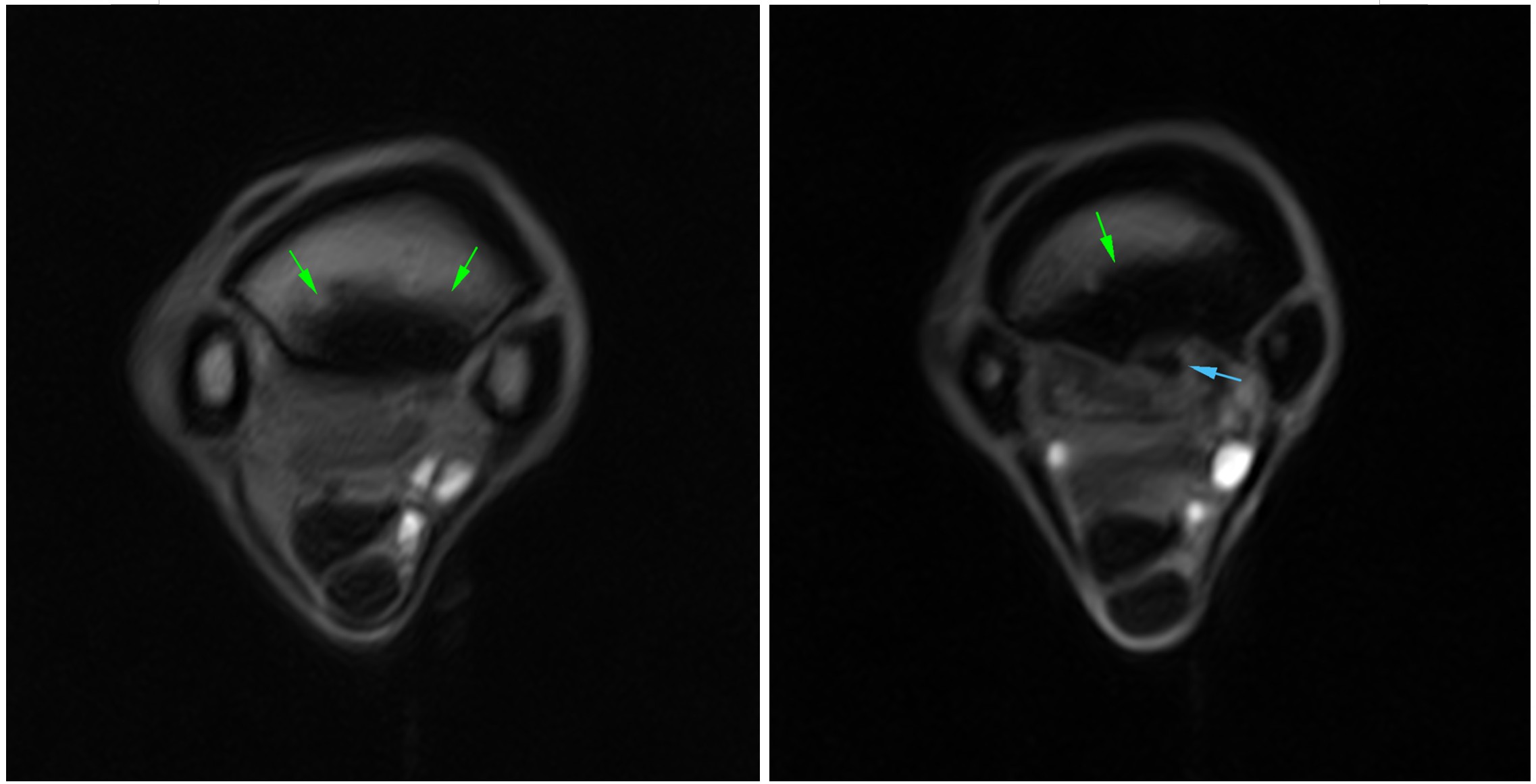
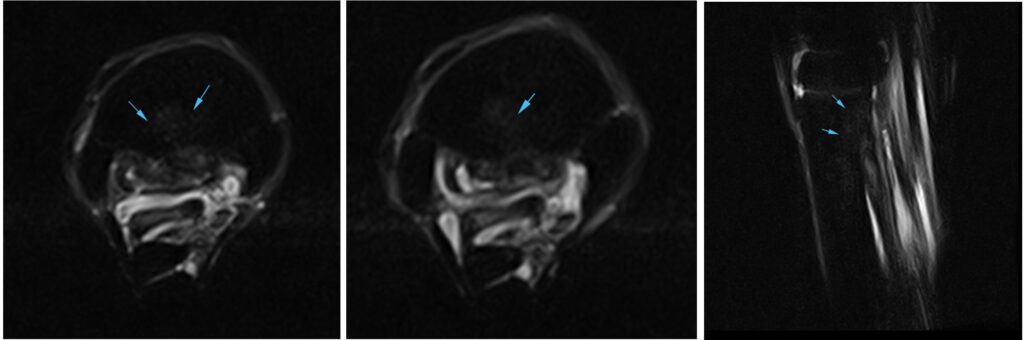
Standing equine MRI of the right proximal metacarpal region revealed marked sclerosis of the proximal metacarpus, and mild, diffuse fluid signal within the palmar cancellous bone of the third metacarpal bone. All are indicative of bone marrow oedema.
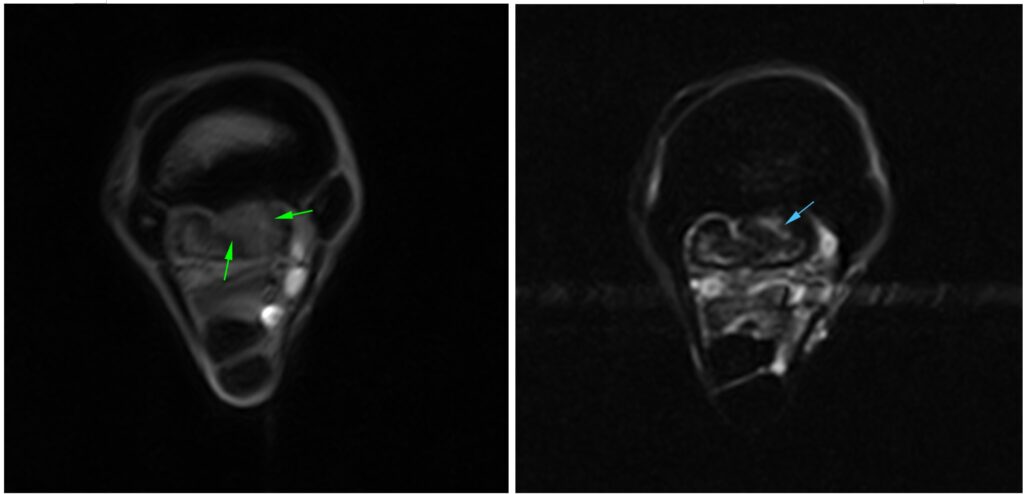
The avulsion fragment was identified as an approximately triangular shaped region with associated fluid signal within the suspensory ligament immediately distal to the avulsion site, suggestive of ongoing inflammation.
The interface between the suspensory ligament and the adjacent bone was poorly defined, raising suspicion of adhesion formation. Additionally, there was enlargement of the medial lobe of the suspensory ligament with signal alterations consistent with chronic fibrosis and moderate desmopathy.
Conclusion
Standing MRI provided a more comprehensive evaluation of the injury and its stage of healing. The identification of fluid signal within the suspensory ligament, indicative of ongoing inflammation, was crucial in guiding the subsequent rehabilitation plan. Accordingly, standing MRI provided information that could not have been extrapolated from ultrasonography alone. While the avulsion fragment was also visible on radiographs, radiographic imaging does not provide insight into bone marrow oedema, which is also indicative of activity of bone injury.
Furthermore, with the implementation of iNAV – Hallmarq’s new motion correction sequence – STIR images were of high diagnostic quality despite increased patient movement. Previously, such motion would likely have resulted in non-diagnostic scans and an inconclusive diagnosis.
Diagnosing chronic avulsion fracture of the proximal suspensory origin remains a challenging pathology. However, ongoing advances in MRI software now allow for the acquisition of critical information that complements conventional imaging modalities such as radiography and ultrasonography.
With thanks to Drs Henry O’Neill and Ethan Yizhen Li, Donnington Grove Equine Vets, UK, for sharing this case with us.